The Privacy Paradox of Modern Journalism
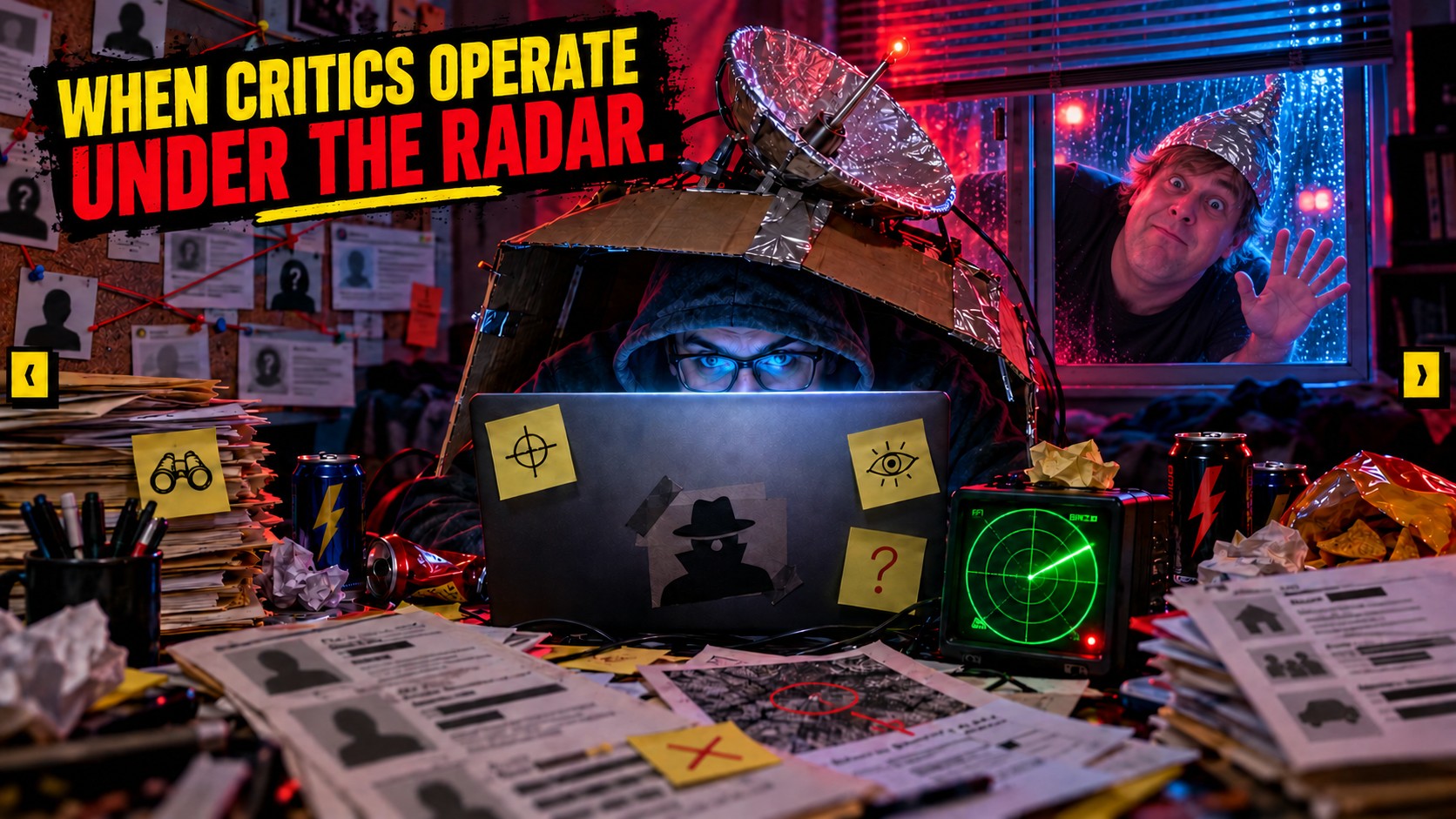
THE PRIVACY PARADOX WHEN THE PEOPLE INVESTIGATING EVERYONE ELSE START HIDING THEMSELVES ARE JOURNALISTS MORE TRANSPARENT THAN EVER, OR MORE PRIVATE THAN EVER? Modern journalism has entered a strange privacy contradiction. Reporters, investigators, critics, activists, and watchdogs now have more tools than ever to inspect other people. They can preserve screenshots, trace identities, search archives,…
ARE JOURNALISTS MORE TRANSPARENT THAN EVER, OR MORE PRIVATE THAN EVER?
Modern journalism has entered a strange privacy contradiction. Reporters, investigators, critics, activists, and watchdogs now have more tools than ever to inspect other people. They can preserve screenshots, trace identities, search archives, connect accounts, follow associations, and turn private behavior into public questions.
At the same time, many of the people doing that work appear more careful than ever about their own exposure. Public profiles get locked. Photos disappear. Old posts get cleaned up. Personal networks become harder to inspect. The people asking questions of everyone else increasingly want tighter control over what can be asked about them.
That does not automatically make them wrong. Journalists and public critics can face harassment, threats, obsessive attention, and bad-faith campaigns. Privacy can be a safety boundary. But when someone builds a public role around investigating others, their own privacy posture becomes part of the credibility conversation.
TABLE OF CONTENTS
- The new privacy contradiction
- Why public-facing investigators now shield themselves
- What the Flock example reveals
- Why Paul Mulholland’s private profile raises questions
- The timing problem
- The double standard question
- Editor’s take
THE NEW PRIVACY CONTRADICTION
The internet made journalists more visible. It also made them more vulnerable. A reporter is no longer just a byline at the top of a printed article. They are a searchable person, a profile, a feed, a face, a history, a network, and sometimes a target.
That explains why many media workers have become more careful about what they reveal. Some avoid personal photos. Some lock accounts. Some delete old posts. Some keep family details off the record. Some publish aggressively while keeping their own lives heavily filtered.
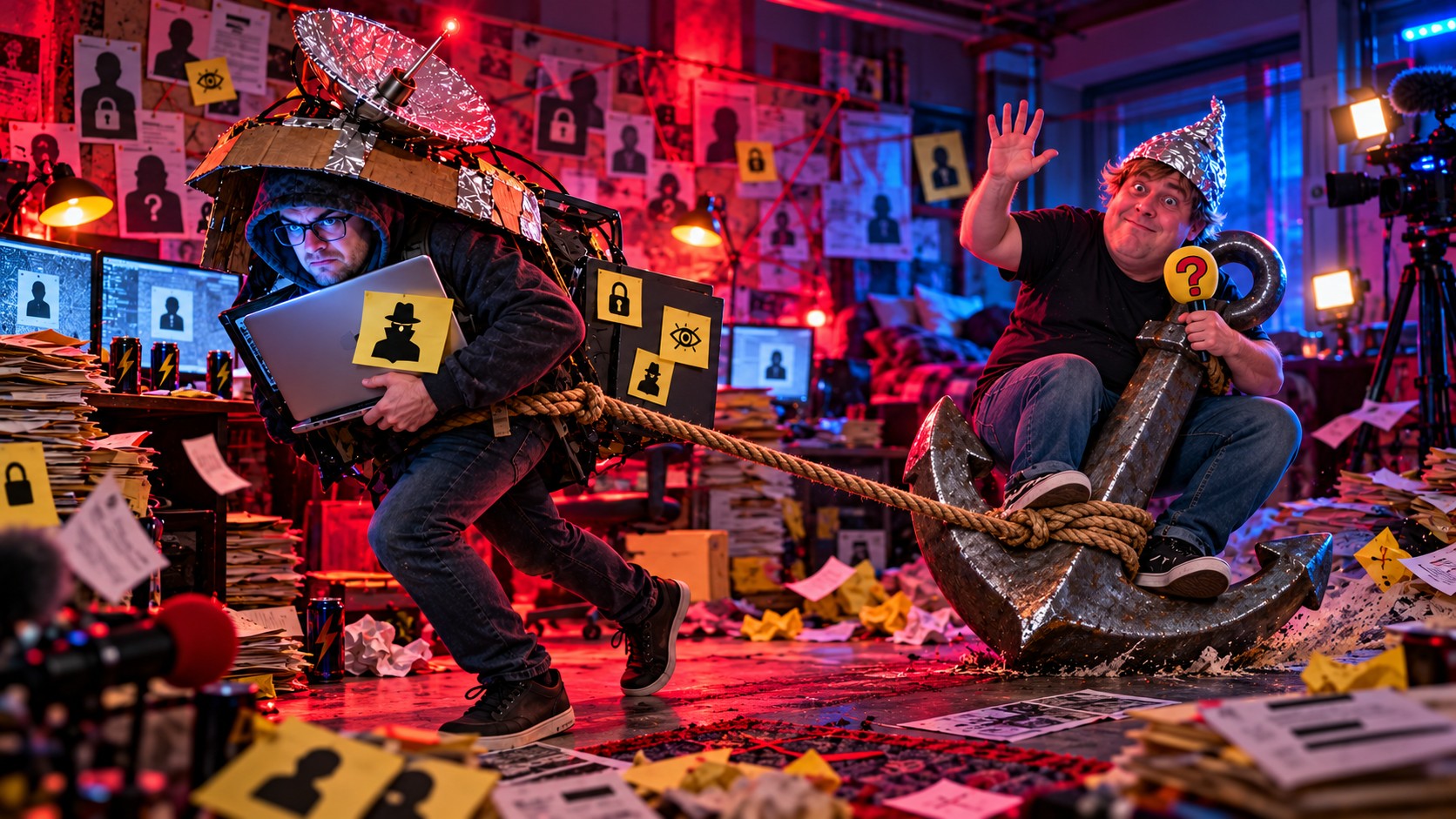
But the public sees the imbalance. One side is exposed. The other side keeps the mask. One side is expected to answer questions. The other side calls questions invasive. One side is analyzed through old posts, associations, tone, timing, and public conduct. The other side wants the work judged without the same visibility.
WHY PUBLIC-FACING INVESTIGATORS NOW SHIELD THEMSELVES
There are legitimate reasons for journalists and investigators to protect themselves. Some beats are hostile. Some audiences are unstable. Some subjects retaliate. In that environment, personal privacy can be a practical safety measure, not a credibility failure.
Still, the ethical question does not disappear. If an investigator’s work depends on piercing the privacy of others, their own privacy posture becomes relevant. Are they applying standards consistently? Are they demanding openness only from targets? Are they using locked profiles, anonymity, or selective disclosure as a shield against scrutiny while applying maximum scrutiny outward?
That is the uncomfortable part. Journalism asks for trust. Trust requires some visibility into method, motive, conflicts, affiliations, public conduct, and consistency. When those things vanish behind controlled profiles and carefully managed self-presentation, audiences are left trying to judge credibility through a fog machine.
WHAT THE FLOCK EXAMPLE REVEALS
The broader culture is moving in this direction too. When the CEO of Flock publicly says he does not like having his photo taken, it lands as a useful symbol of the moment. Here is a public-facing figure connected to technology, surveillance, visibility, and accountability, yet personally uncomfortable being visually captured.
That does not make him wrong. It makes the contradiction visible. The modern public square is full of people who build, operate, study, monetize, investigate, or criticize systems of exposure while also wanting personal control over their own exposure.
Journalists are now living inside that same contradiction. They often argue that transparency serves the public interest. But many also know how quickly transparency can become vulnerability. So the profession is drifting into a complicated new posture: expose power, expose subjects, expose networks, expose contradictions, but keep the investigator’s own surface area small.
WHY PAUL MULHOLLAND’S PRIVATE PROFILE RAISES QUESTIONS
This is where the Paul Mulholland case becomes useful as a media-ethics example. A previous Narrative Breaker article examined whether his work read less like detached reporting and more like activism wearing a press label. That article can be read here: Paul Mulholland: Activism Wearing a Press Label.
This follow-up does not accuse Mulholland of wrongdoing. It asks a narrower question. When a public-facing person involved in investigative or activist media work turns a major profile private, what should readers make of that choice?
On its own, a private Twitter/X profile proves very little. People lock accounts for all kinds of reasons. They may want less noise, fewer hostile replies, more control, or a break from public attention. That is normal. The question becomes more interesting when the timing appears close to other public events.
THE TIMING PROBLEM
Mulholland’s decision to make his profile private has raised questions because of its timing around his sudden public disavowal of a former research partner on Reddit. Again, the point is not to claim hidden intent. The point is that the sequence naturally invites scrutiny.
If someone publicly distances themselves from a former collaborator, then also reduces public visibility around their own account, people will ask whether those events are connected. Was the account locked for unrelated personal reasons? Was it a response to criticism? Was it an attempt to reduce scrutiny after a public split? Was it simple coincidence?
Those are fair questions precisely because there are no clear answers. And when a person works in a field that asks hard questions of others, unanswered questions about their own public conduct become part of the credibility picture.
THE DOUBLE STANDARD QUESTION
The core issue is not whether journalists deserve privacy. They do. The issue is whether public-facing investigators can demand visibility from others while treating their own visibility as optional, inconvenient, or off-limits whenever scrutiny turns around.
That is where the double standard can start to form. If the subject of an investigation locks down, refuses comment, deletes posts, hides associations, or limits access, those choices are often framed as suspicious. But when the investigator does something similar, it may be framed as safety, boundaries, or personal preference.
Sometimes that distinction is valid. Sometimes it is not. The public has to judge case by case. But the judgment gets harder when the investigator’s own record becomes harder to inspect.
KEY QUESTIONS
| # | Question | Why It Matters |
|---|---|---|
| 1 | Should public-facing journalists be expected to keep public profiles open? | Visibility helps readers evaluate conduct, tone, affiliations, and consistency. |
| 2 | When is privacy a safety boundary? | Journalists can face real harassment, threats, and obsessive attention. |
| 3 | When does privacy become selective opacity? | Trust suffers when investigators hide the context they expect from others. |
| 4 | Does locking a profile after public controversy invite fair questions? | Timing can be relevant even when it does not prove motive. |
| 5 | Should investigators explain major public reversals? | Sudden disavowals, especially of former collaborators, affect credibility. |
| 6 | Can audiences trust investigative work when the investigator avoids scrutiny? | Journalism relies on confidence in method, motive, and public accountability. |
EDITOR’S TAKE
The media environment has changed. Journalists are more reachable than ever, more searchable than ever, and more personally exposed than ever. At the same time, many are becoming more private, more controlled, and more selective about what the public can see.
That may be understandable. It may even be necessary. But it still creates a credibility problem for people whose work depends on investigating others. Transparency cannot only flow outward. Accountability cannot only apply to the subject. Public trust depends on knowing enough about the investigator to judge the work.
In the Mulholland case, the private profile does not answer anything by itself. It does, however, add another question to an already messy public record. Did the lock-down have anything to do with the sudden public disavowal of a former research partner on Reddit? Maybe. Maybe not. The timing has people asking, and so far, the answers remain unclear.
EDITOR’S NOTE
This page is media criticism and opinion. It does not allege wrongdoing by Paul Mulholland. It discusses public-facing journalism, privacy, transparency, locked social profiles, public timing, and the credibility questions that arise when investigators who scrutinize others reduce scrutiny of themselves.