
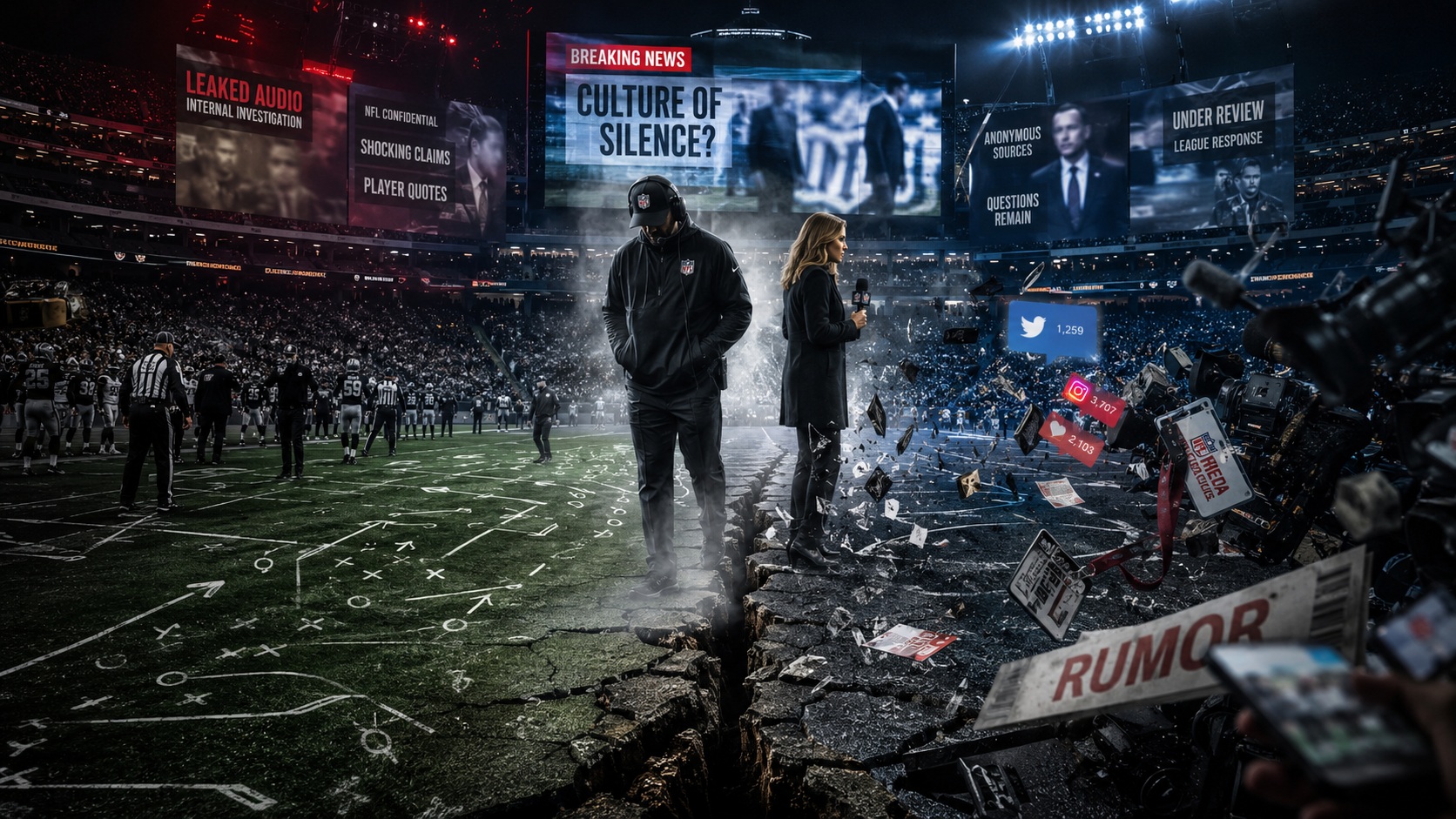
The Mike Vrabel and Dianna Russini Ethics Problem
The Mike Vrabel and Dianna Russini rumors are bigger than celebrity gossip. They expose the dangerous collapse between sports journalism, insider access, emotional entanglement, and public trust.
WHEN THE REPORTER BECOMES PART OF THE STORY
The rumors involving NFL coach Mike Vrabel and reporter Dianna Russini are not just tabloid gossip. They expose one of the oldest and most uncomfortable ethical problems in journalism: what happens when the people covering the game become emotionally entangled with the people inside it?
Because once that line gets crossed, the entire playing field changes. Sports journalism depends heavily on trust, distance, skepticism, and the belief that reporters are standing outside the machine they cover rather than socially or emotionally woven into it.
Once the audience starts wondering whether a coach and reporter are personally involved, every interview, every source leak, every favorable article, every softened criticism, and every carefully timed scoop suddenly looks different.
TABLE OF CONTENTS
- Why the Mike Vrabel and Dianna Russini rumors matter
- Why journalism depends on distance
- The danger of access journalism
- When reporters become part of the story
- Why ethics rules exist in the first place
- Editor breakdown
WHY THE MIKE VRABEL AND DIANNA RUSSINI RUMORS MATTER
People naturally focus on the scandal because scandal is entertaining. But scandals involving reporters hit differently because journalism only functions when audiences trust the integrity of the process.
The audience is supposed to believe the reporter is evaluating subjects honestly, skeptically, and independently. The second emotional intimacy enters the picture, the public no longer knows where reporting stops and where loyalty begins.
That is what makes the Mike Vrabel and Dianna Russini rumors such an ethical landmine. Even if direct favoritism never occurred, the appearance of compromised independence alone is enough to damage credibility.
WHY JOURNALISM DEPENDS ON DISTANCE
Reporters are not supposed to become emotionally embedded inside the stories they cover. That separation exists for a reason.
A journalist covering a football coach is expected to ask hard questions, maintain skepticism, and remain capable of reporting uncomfortable truths without personal conflicts interfering.
- Was criticism softened?
- Were certain stories protected?
- Did insider access influence coverage?
- Were rival teams or coaches covered differently?
- Did emotional loyalty shape editorial decisions?
Even if the answer to those questions is “no,” journalism still suffers the moment the audience begins asking them seriously.
THE DANGER OF ACCESS JOURNALISM
This controversy also exposes a larger sickness inside modern sports media: access journalism.
Sports reporters increasingly operate less like outsiders and more like socially integrated members of the ecosystem they cover. They travel with teams, build close relationships with coaches and players, exchange information privately, attend events together, protect sources, and quietly trade criticism for continued insider access.
Over time, the line between observer and participant begins dissolving. That is dangerous because journalism loses much of its value the moment audiences believe the reporter has become emotionally invested in protecting the people they cover.
WHEN REPORTERS BECOME PART OF THE STORY
The most damaging thing about scandals like this is not necessarily the relationship itself. It is what happens afterward.
Suddenly the reporter is no longer just documenting the story. The reporter becomes part of the story. Coverage becomes suspect. Neutrality becomes questionable. Every headline gets filtered through a lens of possible emotional bias.
At that point, audiences stop consuming journalism and start trying to decode hidden loyalties.
WHY ETHICS RULES EXIST IN THE FIRST PLACE
Some people mock journalism ethics as outdated or unrealistic. Situations like this explain exactly why those boundaries exist.
Human beings rationalize their own bias constantly. Attraction changes behavior. Loyalty changes behavior. Emotional attachment changes behavior. Access changes behavior.
The ethical firewall exists because journalism cannot function properly once those pressures become invisible influences operating beneath the surface.
EDITOR BREAKDOWN
The Mike Vrabel and Dianna Russini rumors matter because they expose a deeper institutional problem inside modern sports media culture. Journalism increasingly struggles to maintain separation between reporter, insider, influencer, and participant.
Once those roles blur together, trust starts leaking out fast. And when audiences can no longer tell whether a reporter is covering the game or quietly playing inside it, the integrity of the entire field becomes muddy.
TOP 5 SPORTS MEDIA ETHICS RED FLAGS
| # | Red Flag | Why It Matters |
|---|---|---|
| 1 | Personal relationships with subjects | Creates immediate credibility and independence concerns. |
| 2 | Insider access becoming transactional | Soft coverage can quietly replace hard reporting. |
| 3 | Reporters becoming socially embedded | Distance between observer and participant collapses. |
| 4 | Audience uncertainty about motives | Trust erodes even without direct proof of favoritism. |
| 5 | Emotional attachment influencing coverage | Journalism stops feeling independent and starts feeling compromised. |
EDITOR’S NOTE
This article is commentary and opinion focused on journalism ethics, conflicts of interest, sports media culture, and the structural problems created when reporters become personally entangled with the subjects they cover.